The Youngest Principal Took the Long Road

The Canada ICI Principal Series – Andrew Loewen
Becoming a Principal is one of the most meaningful milestones in our origination practice. It’s built on a foundation of consistent performance, but that is not what defines it. What truly distinguishes a Principal is who they are, which shows in the values, judgment, leadership and generosity they bring to their work and the people around them. While our Principals share much in common, the title only tells you so much. Behind it are individual journeys, each with mentors, hard moments and decisions that easily could have gone a different way.
We’re continuing our series with Andrew Loewen, a Principal in our Winnipeg office. Read about Andrew’s journey below.
Andrew Loewen is more comfortable giving credit than taking it. He is measured and honest, and when the conversation turns to his own success, he tends to hand the credit to the people and the environment around him. He will tell you plainly that he has never been someone who set out big, ambitious goals. His mindset has always been simpler than that. Do the work, earn the opportunity, and trust that if you deserve it, it will come.
That is what makes his appointment as Principal worth paying attention to. While Andrew holds the title of youngest Principal at Canada ICI, his trajectory defies the typical narrative of early achievement. It is not a story about speed, ego, or racing toward the next title. If anything, it is the opposite. Andrew took his time. He stayed. He learned. He picked the right place, played the role in front of him, and let the foundation build before he stepped into anything bigger.

The roots of that patience go back to Winnipeg, where he was born and raised. Real estate came into his life early through his father, who spent close to thirty years in property management, most of it with Stevenson, a firm tied deeply to the city. Some of Andrew’s earliest memories are of driving around Winnipeg with him on the weekends, listening to him point out buildings one after another. He managed that one. This person owned that one. That business operated out of there. It gave Andrew a particular way of seeing the city, not just as a place to live, but as a web of buildings, owners, and relationships, each with a story attached.
Years later, he finds himself doing almost exactly the same thing. Now, when he drives through Winnipeg with his own kids in the back seat, he points out the buildings he has helped finance. The words have changed slightly, but the feeling behind them is the same one his father passed down. What Andrew inherited was more than an interest in real estate. It was a sense of place, a connection to his community, and an understanding that the work means more when you can see its impact around you. For many people who build a career in real estate, that is where the purpose comes from. It is not just the deals or the buildings. It is the ability to leave a mark on the communities you know, and to feel that your work has become part of the city’s story.
His mother gave him a different version of the same lesson. She started at Canada Life as a computer programmer when she was nineteen and stayed for decades until she retired, working a four-day week for much of it so she could be home with the kids. Between the two of them, Andrew grew up surrounded by commitment, consistency, and long careers built inside institutions that mattered. That influence runs through his own path, even though he chose an industry with far more risk and a much less predictable payoff.
Before he found the right corner of real estate, Andrew spent a while figuring out what did not fit. He worked maintenance and property management jobs connected to his father’s world, including early mornings at a downtown building where the work was about as unglamorous as it gets. He tried appraisal for a stretch. Through all of it, one thing stayed constant. He knew he wanted to be in real estate. He just had not figured out where he belonged in it yet.
That search eventually brought him to Canada ICI. After telling someone close to him that he wanted to be on the ownership side, Andrew was pointed toward Chase Allen, who was doing financing work that sounded different and interesting. He joined as a summer analyst in 2017, stayed on through the school year, and graduated the following spring. The work itself was not exciting at first. He was hired to update spreadsheets and barely knew how to use Excel when he started. But something else caught his attention almost immediately: the people.

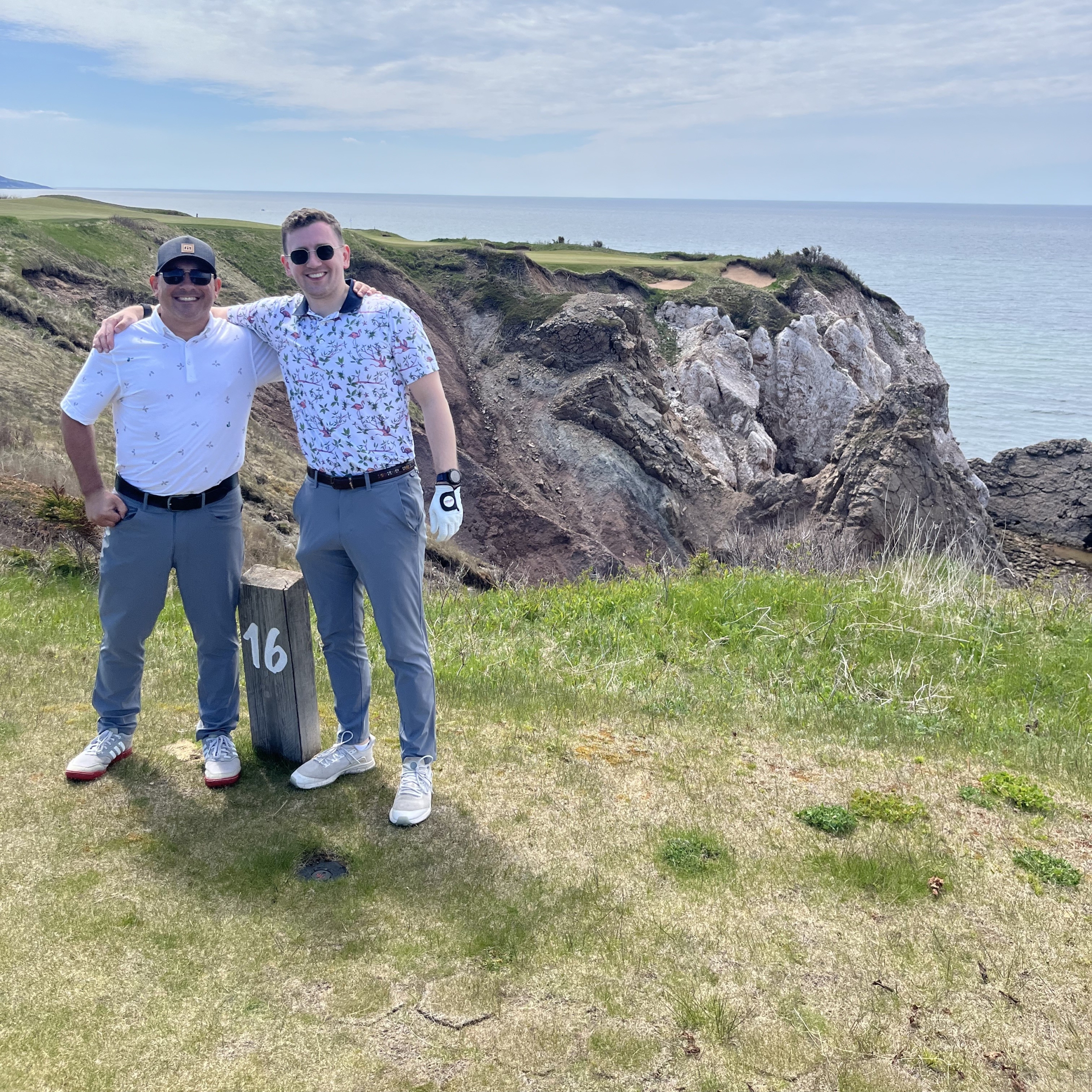

Andrew talks about those early years with real affection. The Winnipeg office had great people, and the culture left a lasting impression on him. He remembers the energy, the willingness to help, and the feeling that any question he asked would actually get answered. Chase in particular became someone he looked up to. Andrew watched how early he showed up, how hard he worked, and how much energy he carried into the office every day. For someone just starting out, being close to that made a difference. He remembers asking a constant stream of questions, and the response was never impatience. People encouraged him to keep asking, then pulled up a chair and worked through the answer with him.
What Andrew found at Canada ICI was not just a job. It was a place where ambition did not have to be guarded. He describes the company’s entrepreneurial spirit as one of its greatest strengths, but what matters most to him is the kind of entrepreneurship it is. In a competitive industry where people can be protective of relationships, information, and opportunities, Canada ICI felt different. The culture was not about racing to the printer or keeping knowledge to yourself. It was about sharing what you knew, helping others get better, and paying forward the support you had received. People wanted to grow, but they also wanted to help each other grow. If he called a colleague in another city with a question about a deal, he knew the response would be collaborative, not guarded. That openness is a big part of why he stayed.
He spent more than four years as an analyst before transitioning to an originator role, then continued building momentum as a Director and Senior Director before being named Principal. Along the way, he also made meaningful contributions to the growth and momentum of the team he joined. He never rushed to become an originator, and he never treated those analyst years as something to get through. To him, they were a paid education in the business. A time to learn the fundamentals, ask questions, understand how deals came together, and build the foundation that would later make him a stronger originator.

That patience is now one of the lessons he hopes to pass along. His honest advice to people who want to be brokers quickly is to slow down. Be patient. Learn the business. Do not rush so quickly toward production that you miss the years that teach you how to be good. He understands the desire to progress, but he also believes that moving too fast can lead to burnout, mistakes, and a shallow base of experience.
His own version of that ambition was never passive, and he is not saying ambition is wrong. He is saying ambition needs somewhere solid to stand. He joined a top-producing team because he saw an opportunity to learn from people who were already doing the work exceptionally well. Even if he had fallen on his face after three years, he believed he would have learned enough to make the experience worthwhile. If it worked, the upside was significant. That balance — practical, patient, but still willing to bet on himself — became one of the defining choices of his career.
He was young, without a mortgage or kids yet, and he kept coming back to a simple thought. If other people could do this, why couldn’t he?
It helped that his father, who Andrew is quick to describe as not a risk-taker, encouraged him to go for it. His dad knew Chase and Luke by reputation around Winnipeg, recognized they were clearly doing something right, and told his son to get as close to them as he could for as long as he could. Andrew took that to heart. He did not need to invent a path from nothing. He needed to choose the right people and the right place, and then commit fully.
That same thinking shapes how he talks about his own kids. He wants them to understand hard work, but also the value of staying with something good. He is candid about taking a salary well below market when he started, because he could see the potential ahead. He wants his kids to know there is real power in choosing the right company and building inside it, rather than jumping around to the next small increase. Andrew shared a quote he heard from Ryan Serhant as a way to describe it: “Don’t pick a great role in a bad movie. Pick a great movie and make the role great.”
There is a quiet confidence in a line like that. It does not sound flashy, but it captures him well. Andrew is not trying to make success look complicated. He is saying that good judgment, patience, humility, and steady effort add up over time. Choose carefully. Learn deeply. Make yourself useful. Do the job in front of you well enough that the next opportunity becomes possible.
As Principal, Andrew sees part of his responsibility as mentorship. He wants younger people to understand that the path does not need to be rushed to be meaningful. His contribution is not only production or deal-making, though he clearly enjoys the work. It is also perspective from someone who has sat in the analyst seat, taken the longer route, and come out the other side with a clearer sense of what those years are worth.
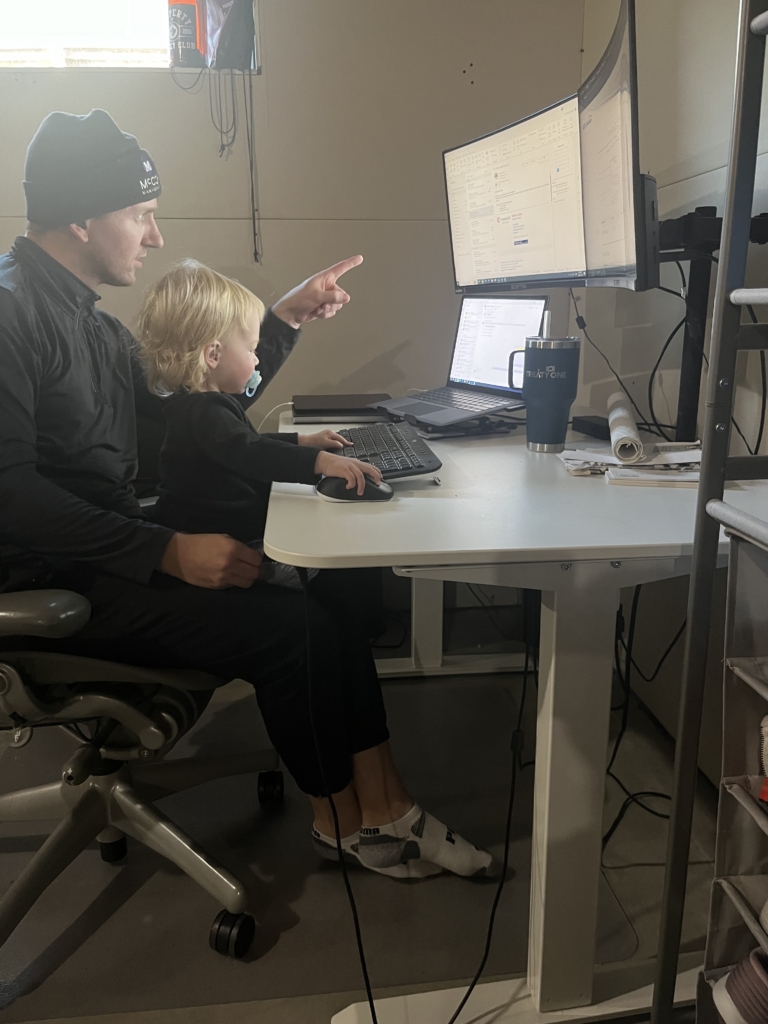
When asked whether he wants to take on a larger role one day, Andrew does not answer with a title. He says he will do what is asked of him. That could sound understated, but in his case, it feels consistent. He has never built his career by loudly asking for the next thing. He has built it by earning trust, staying close to good people, and being ready when the tap on the shoulder comes.
That is what his appointment meaningful. Andrew became one of the youngest people ever to reach Principal not by cutting corners, but by trusting the slower road. He grew up around long careers, deep community ties, and people who showed him what commitment looks like, and he carried those values into a more entrepreneurial world. Along the way, he proved that patience and ambition are not opposites at all.
In a business that so often rewards speed, his path is a reminder that there is still real power in staying. Staying curious, staying useful, staying patient, and staying close to the right people, long enough to become the person others now turn to for perspective. The youngest Principal took the long road, and that may be exactly why he was ready when he arrived.
Creatively Disciplined. Disciplined Creativity.
What is it about being youthful that we tend to reward and admire? In the context of business, youth...
Related Articles