The Art of Finding a Way
The Canada ICI Principal Series – Bill Pigden
Becoming a Principal is one of the most meaningful milestones in our origination practice. It’s built on a foundation of consistent performance, but that is not what defines it. What truly distinguishes a Principal is who they are, which shows in the values, judgment, leadership and generosity they bring to their work and the people around them. While our Principals share much in common, the title only tells you so much. Behind it are individual journeys, each with mentors, hard moments and decisions that easily could have gone a different way.
We’re continuing our series with Bill Pigden, a Principal in our Winnipeg office. Read about Bill’s journey below.
If you spend enough time around Bill Pigden, you quickly learn that the first answer is rarely enough.
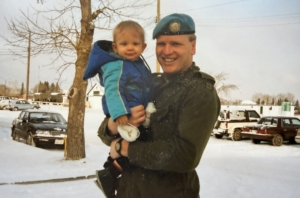
It’s a trait that goes back further than his career, all the way to a childhood spent as Billy. His father, also Bill Pigden, spent his career in the military, serving as a Major in the infantry. He believed in discipline, structure, and carrying responsibility without drawing attention to it. Rules existed for a reason. Orders were followed. Some questions did not require much explanation beyond, “Because that’s what we’re doing.”
Bill respected that. He also had a habit of pushing back on it.
Growing up, he admired many of the qualities his father embodied, even if he did not always share them. Their relationship was built on mutual respect, but it was also shaped by conversations that often started the same way.
“But why?”
If an answer didn’t make sense, Bill wanted to understand it. If there was a better way to do something, he wanted to find it. Looking back, it is difficult not to see how that instinct shaped much of what followed. The kid who kept asking questions eventually became an expert known for solving problems, challenging assumptions, and looking beyond the obvious answer when others had stopped searching.

If his father gave him structure, his mother gave him something equally important. With his father often away for six months or more at a time on peacekeeping missions, she was the constant at home. She was the one driving him to practices, games, and activities, and the one offering steady, unwavering support no matter what decision he was facing. Caring, kind, and endlessly supportive, she anchored the family through every deployment and every transition.
Today, when Bill talks about his parents, there is no sense of rebellion in the story. If anything, there is gratitude. The discipline, accountability, and work ethic that became the foundation of his career came directly from the home he grew up in. Where he and his father differed was in how they approached people.
Bill’s father came from a generation that often carried things quietly. Bill became someone who believes most things are better talked through.
Over time, he learned that people rarely need someone with all the answers. More often, they need someone willing to have the conversation. Whether he is speaking with a client, a colleague, or a friend, his instinct is to engage, ask questions, and work through a problem together rather than around it.
Long before he was working with clients, however, he was learning those lessons in a hockey crease.
Like many Canadian kids, hockey dominated much of Bill’s childhood and teenage years. He played at a high level, eventually reaching Junior A and playing in the SJHL. While the sport taught him discipline and resilience, playing goalie taught him something else: accountability.
A goalie occupies a unique place on the ice. Surrounded by teammates, yet ultimately alone when the puck is headed toward the net, the position forces you to take ownership of the outcome. There is no hiding from mistakes. You adjust, refocus, and prepare for the next shot.
Without realizing it, Bill was developing a mindset that would later shape the way he approached business.

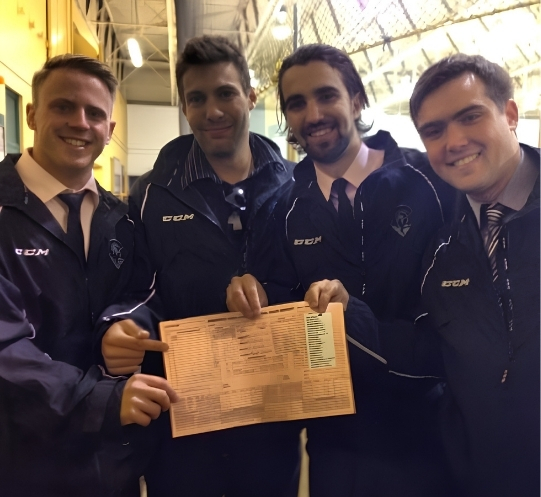

Hockey also taught him one of the hardest lessons an athlete can learn: knowing when it is time to move on.
By the time he was 18, the game no longer felt the way it once had. The travel, uncertainty, and constant movement from one opportunity to the next had gradually replaced the enjoyment that originally drew him to it. The moment that stands out most came during a trip to British Columbia, when his vehicle broke down in Regina while pursuing yet another hockey opportunity.
Looking back, the broken-down vehicle feels almost symbolic.
Sitting there, Bill realized hockey had become something different. He was tired of living out of a suitcase and chasing the next stop. More importantly, he recognized that the path he was on no longer felt like his own.
But the work ethic remained, and so did the competitiveness and desire to improve. They simply found a new outlet.
After a stint at a car dealership and a return to school, Bill eventually found his way into commercial banking. What began as internships at a Big 5 Bank grew into a promising career, and for a long time he assumed it was where he would stay.
The path was clear. The institution was respected. Stability was virtually guaranteed.
What became increasingly difficult, however, was feeling responsible for relationships while having limited ability to influence outcomes. Bill had spent years earning the trust of clients and bringing forward opportunities he genuinely believed made sense. Too often, he found himself in situations where a client needed a solution, yet the answer coming back through the system was still no.
During the interview, he described the feeling in a way that only a former goalie could.
“It’s like trying to stop the puck without a goalie stick.”

What frustrated him was never responsibility. It was wanting a greater role in solving the problem.
Around that same time, a series of unlikely circumstances began nudging him toward a different path. Through hockey connections, a torn MCL, physiotherapy appointments, and eventually a coffee with Chase Allen, Bill found himself considering an opportunity he had never planned on pursuing.
At first, the idea of leaving the bank made little sense. It meant walking away from a stable career, taking a pay cut, and stepping into an entirely different side of the industry. But the more he thought about it, the more he realized the opportunity represented something he had been missing.
Canada ICI offered the chance to be part of building the solution.
What attracted him was not that deals were easier. It was that success depended on understanding the borrower, lender, asset, and structure well enough to find a path forward. For someone who had spent much of his life searching for better answers, that challenge was hard to ignore.
Eventually, the decision became less about what he was leaving behind and more about what he was moving toward.
The learning curve was immediate. Despite his banking experience, Bill quickly realized how much he still had to learn. Working alongside Chase Allen and the Winnipeg team provided both the foundation and confidence needed to make the transition, and by December 2019 he had officially moved into an origination role.
A few months later, the world shut down.

For someone in the early stages of building a business, it could hardly have looked like worse timing. Yet while many people pressed pause, Bill did what he had always done. He picked up the phone.
People were home. They were available. They were willing to talk.
Some of the largest client relationships of his career emerged during that period, not because he had a master plan, but because he stayed engaged when others pulled back. Rather than waiting for perfect circumstances, he focused on the opportunities that still existed.
That mindset continues to shape how he thinks about becoming a Principal.
For Bill, the appointment reflects years of relationship-building, hard work, and showing up consistently without becoming overly focused on titles or milestones. More than anything, he sees it as a responsibility to help preserve the culture that attracted him to Canada ICI in the first place.
Ask Bill about the company’s future and the conversation quickly returns to its people.
Growth matters. Market presence matters. But none of it means much if the entrepreneurial spirit that made that growth possible disappears along the way.
He believes Canada ICI’s strength comes from its authenticity, its willingness to collaborate, and its commitment to finding solutions rather than hiding behind process. Sometimes that means finding a way to yes. Sometimes it means helping people understand why the answer is no. Either way, clients deserve honesty.
To Bill, that is leadership.

It is also why he proudly describes himself as a “morale guy.” He understands that performance is not purely technical. People need encouragement, connection, and honest conversations. Leadership begins by meeting people where they are and helping them move forward.
Those lessons matter even more now that he is a husband and father of three. As much as he loves the business, he believes success loses its meaning when it comes at the expense of everything else. Family, relationships, and professional achievement are not competing priorities. In his mind, they are deeply connected.
Which brings the story back to where it started.
Today, Bill’s parents tell anyone who will listen how proud they are of their son. The same father who taught him discipline and resilience, and the same mother who supported him through every deployment and every decision, gave him the confidence to pursue opportunity when it appeared.
Growing up, he was Billy because there was already a Bill in the room.
Over time, he became Bill in his own right.
Not by rejecting what his parents taught him, but by building on it.
And perhaps that is the clearest way to understand his path to Principal. Bill did not build his career by accepting that things had to be done a certain way simply because they always had been. He built it by asking questions, taking ownership of the outcome, and remaining committed to finding solutions when easier answers were available.
The kid who kept asking “why?” eventually found a career built around answering it.
When Entrepreneurial Spirit Shines
It takes a blend of skills to build a business. The right personality, relationships, and support fr...
Underwriting: An Under-tapped Opportunity
Learn more about the often untapped opportunities that a career in underwriting holds.
Related Articles